Radiator Hose Clamp Guide: Spring Clamp, Worm Gear Clamp, or Constant Tension Clamp?
Radiator Hose Clamp Guide: Spring Clamp, Worm Gear Clamp, or Constant Tension Clamp?
A radiator hose clamp is the clamp used to fasten and seal hoses in an automotive cooling system. It is commonly used on upper radiator hoses, lower radiator hoses, coolant hoses, heater hoses, water pump connections, thermostat housing connections, and bypass hoses. Its job is not only to hold the hose in place, but also to maintain sealing during coolant pressure, engine vibration, and repeated heating and cooling cycles.
People searching for radiator hose clamp usually have a practical repair or selection question: which clamp should replace a leaking clamp, what type is closest to original equipment, whether a worm gear clamp can be used, and how to choose the correct radiator hose clamp size.
Where is a radiator hose clamp used?
Radiator hose clamps are used anywhere a rubber coolant hose connects to a radiator, engine fitting, water pump, thermostat housing, heater core, or coolant reservoir line. These positions are exposed to heat, pressure, coolant, engine movement, and vibration.
Common applications include:
- Upper and lower radiator hose connections
- Heater hose and bypass hose connections
- Water pump inlet and outlet hoses
- Thermostat housing connections
- Coolant expansion tank hoses
- Performance cooling hoses and modified engine systems
Because the hose and fitting expand when hot and contract when cold, clamp selection is important. A poor clamp choice can cause cold-start seepage, pressure leakage, hose damage, or repeated tightening work.
Main radiator hose clamp types
| Clamp type | Best use case | Main advantage | Watch out for | |---|---|---|---| | Spring Band Clamp / Constant Tension Spring Clamp | OE-style replacement, radiator hoses, coolant hoses | Maintains clamping force during temperature change | Requires correct size and suitable pliers | | Worm Gear Hose Clamp | General repair and easy replacement | Easy to source, adjustable, simple to install | Over-tightening can damage soft hoses | | German Non-Perforated Hose Clamp | Repair replacement where smoother band contact is preferred | More even band contact than perforated clamps | Select by actual hose outside diameter | | Lined Hose Clamp / Silicone Hose Clamp | Silicone hoses or softer hose materials | Liner helps reduce local hose damage | Confirm band width and torque | | T-Bolt Clamp / Heavy Duty Clamp | Performance, turbo, large-diameter, or higher-pressure systems | High clamping force and stronger structure | Not ideal for every plastic fitting or thin-wall hose |
OE-style replacement: spring band or constant tension clamp
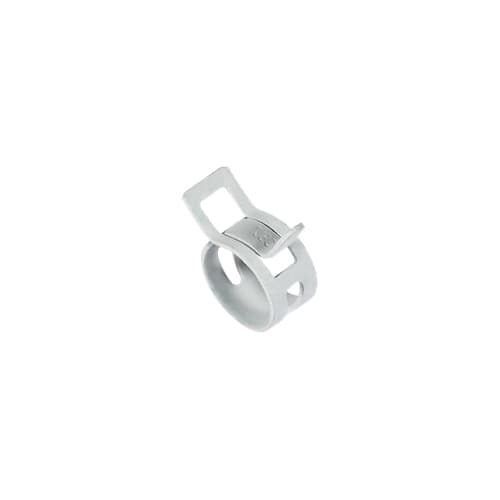
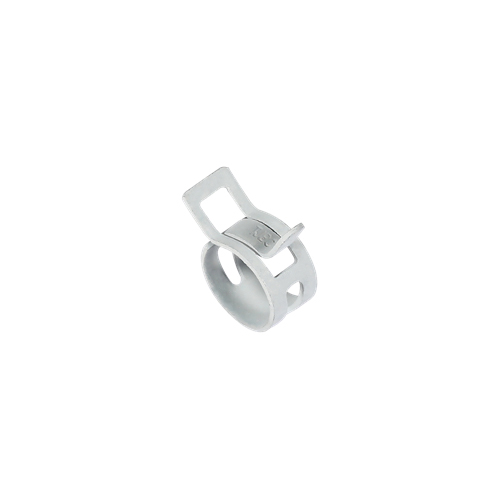
Many original cooling systems use spring band clamps or constant tension clamps because they can maintain clamping force as the hose expands and contracts with temperature. For radiator hoses, heater hoses, and coolant hoses, this self-adjusting behavior is valuable.
For automotive cooling systems that need this type of clamp, Demeite's Spring Band Hose Clamp Standard Type is a relevant product reference. It is suitable for automotive, machinery, and temperature-changing hose applications, but the installed hose outside diameter must match the clamp's working range.
General repair: stainless worm gear clamp or German hose clamp
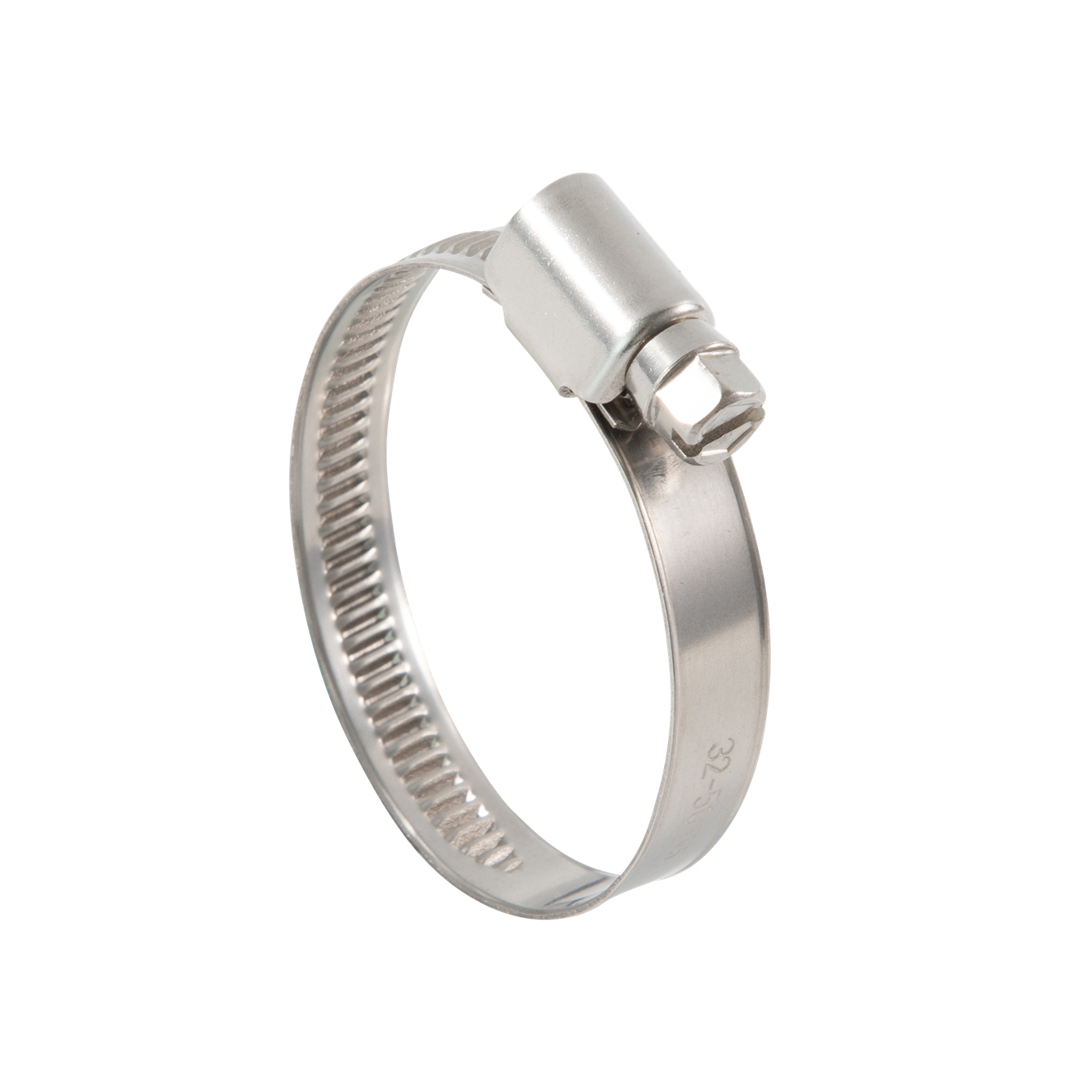
For common repair work, a stainless steel worm gear hose clamp is widely used because it is adjustable, easy to install, and easy for repair users to understand. It can be suitable when replacing a rusted clamp, repairing a small leak, or servicing a coolant hose.
However, radiator hoses are usually soft rubber. A perforated worm gear clamp can leave deeper marks if over-tightened. For a smoother repair option, a German non-perforated hose clamp can provide more continuous band contact. Demeite's German Center Hose Clamp 9mm Bandwidth is a useful reference for this type of fastening.
Performance or heavy-duty cooling systems: T-bolt and heavy duty clamps
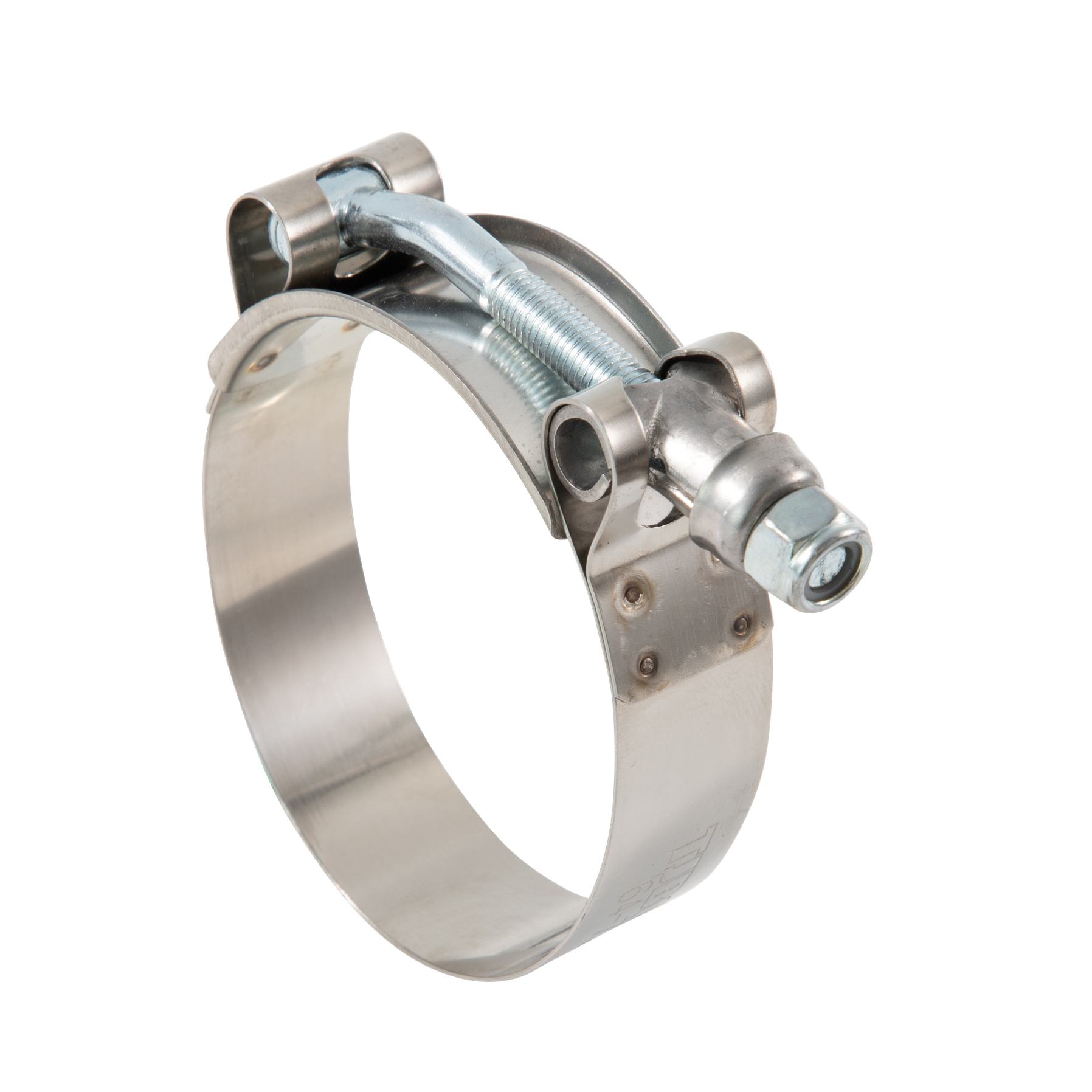
For performance cars, turbocharged engines, intercooler piping, heavy vehicles, large-diameter coolant hoses, or higher-pressure systems, standard clamps may not provide enough holding force. In these situations, a T-bolt hose clamp or heavy duty clamp can be considered.
Demeite's T-Bolt Heavy Duty Hose Clamp and Single Bolt Solid Heavy Duty Clamp are suitable references for stronger hose connections. They should be selected carefully because excessive clamping force can damage thin-wall hoses or plastic fittings.
How to choose radiator hose clamp size
Do not choose a radiator hose clamp only by nominal hose size. The correct method is to measure the actual outside diameter of the hose after the hose is installed on the fitting. Hose wall thickness, barb shape, plastic fitting shape, and installation condition all affect the final outside diameter.
Practical selection rules:
- Measure the hose outside diameter after assembly on the fitting.
- Choose a clamp range where the measured OD sits inside the working range.
- Avoid selecting a clamp at the exact minimum or maximum limit.
- For silicone hoses, soft rubber hoses, or plastic fittings, avoid excessive torque.
- If unsure, provide hose OD, hose material, vehicle position, and application to the supplier.
Basic replacement steps
- Let the engine cool completely before working on the cooling system.
- Release system pressure and prepare a drain container if coolant may escape.
- Remove or loosen the old clamp with the correct tool.
- Inspect the hose and fitting for cracks, hardening, swelling, or corrosion.
- Replace the hose if it is aged, cracked, or no longer flexible.
- Position the new clamp behind the bead or supported sealing area of the fitting.
- Tighten gradually without crushing the hose.
- Refill or top up coolant, run the engine, and check for leaks.
Product and sourcing recommendation
For repair shops, automotive parts buyers, and kit sellers, radiator hose clamp demand can also be included in an automotive hose clamp kit. Demeite's Custom Hose Clamp Assortment Kit can be configured with common repair sizes, clear box labels, private label packaging, and U.S. market-oriented assortment layouts.
For OE-style replacement, confirm the original clamp type and installed hose outside diameter. For repair kits and wholesale sourcing, consider covering spring clamps, stainless worm gear clamps, lined clamps, and selected heavy duty clamps for different automotive hose scenarios.
Q&A
Q1: What type of clamp is best for radiator hoses?
For OE-style replacement and temperature cycling, spring band clamps or constant tension clamps are often preferred. For general repair, stainless worm gear clamps or German hose clamps can be used. For performance or heavy-duty systems, T-bolt clamps may be suitable.
Q2: Can a worm gear clamp be used on a radiator hose?
Yes, it can be used in many repair applications, but it should not be over-tightened. After checking the hose condition and fitting shape, a German style hose clamp is often a better repair option than a basic perforated clamp because the inner band contact is relatively smoother and can help reduce deep marks on rubber radiator hoses. For soft rubber or silicone hoses, a lined clamp is also worth considering.
Q3: How do I measure radiator hose clamp size?
Measure the outside diameter of the hose after it is installed on the fitting, then choose a clamp range that places that diameter comfortably inside the working range.
Q4: Why does a radiator hose still leak after replacing the clamp?
The hose may be aged or cracked, the fitting may be damaged, the clamp may be in the wrong position, the size may be incorrect, or the cooling system may have abnormal pressure.