What Hose Clamp Should You Use for a Pool Pump Hose? German 304 or 316 Stainless Steel
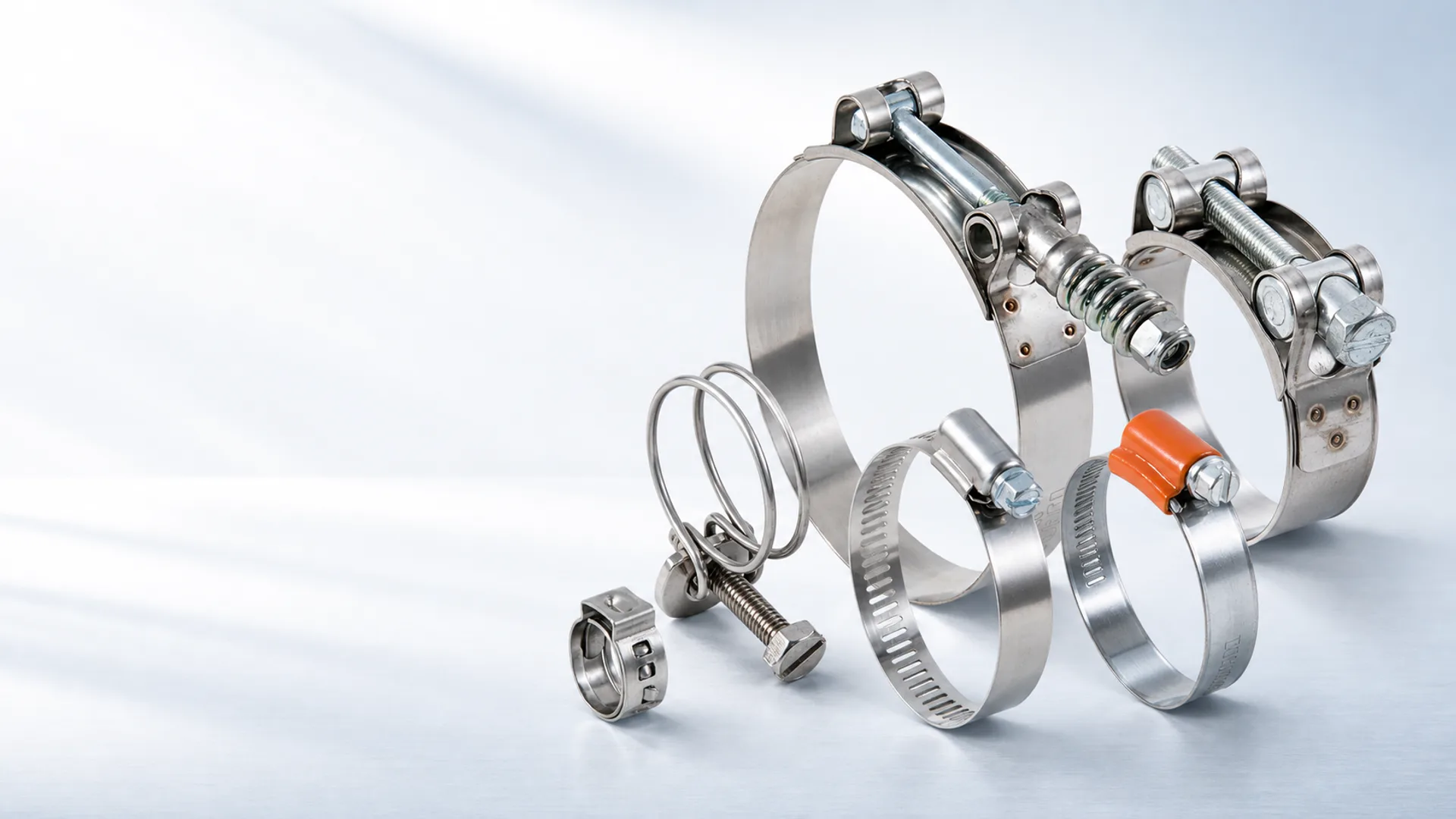
What Hose Clamp Should You Use for a Pool Pump Hose? German 304 or 316 Stainless Steel
A pool pump hose works in a wet, outdoor, chlorinated, and sometimes saltwater environment. If the hose clamp is not selected correctly, the connection can leak, loosen, rust, damage the plastic fitting, or require repeated maintenance. For pool pump hoses, pool filter hoses, return lines, and inlet hose connections, Demeite recommends German 304 stainless steel hose clamps for most standard pools and German 316 stainless steel hose clamps for saltwater pools or highly corrosive environments.
Compared with zinc-plated steel clamps, stainless steel clamps provide better rust resistance. Compared with lightweight perforated clamps, a German hose clamp has a more continuous band, more even tightening force, and better long-term stability around soft pool hoses and plastic fittings.
Why pool pump hose clamp selection matters
Pool pump hoses are not usually exposed to extremely high pressure, but they operate under several demanding conditions: constant moisture, outdoor weather, UV exposure, chlorinated water, saltwater in some systems, pump vibration, and repeated temperature changes around plastic fittings.
If a low-grade steel clamp is used, it may work for a short time but rust quickly. Once corrosion starts, the clamp can lose tightening force and the screw may become difficult to remove. If a low-cost perforated clamp is over-tightened, the band holes may deform and the hose surface may be damaged.
Recommended option 1: German 304 stainless steel hose clamp
For most residential pools, outdoor pool pumps, and common filter hoses, a German 304 stainless steel hose clamp is the balanced choice. 304 stainless steel has good rust resistance and is suitable for wet, outdoor, and long-service water-related applications.
The German clamp structure usually provides a smoother band contact and more even tightening around the hose. This helps reduce local hose damage and improves sealing stability. For pool pump hoses, filter hoses, return lines, and inlet hose connections, 304 stainless steel German hose clamps provide dependable performance at a practical cost.
If the pool is a standard freshwater pool and the pump is installed in a yard, outdoor pump area, or sheltered equipment space, German 304 stainless steel is usually sufficient.
Recommended option 2: German 316 stainless steel hose clamp
For saltwater pools, coastal installations, or equipment exposed to salt spray, German 316 stainless steel hose clamps are recommended. 316 stainless steel is more suitable than 304 for salt, moisture, and stronger corrosion risk.
The cost of a 316 stainless steel clamp is higher, but it can reduce the risk of rust, stuck screws, and connection failure. For commercial pools, coastal villas, salt chlorination systems, and pool equipment rooms that require longer maintenance intervals, 316 stainless steel is the safer choice.
Clamp types that are not ideal for long-term pool use
Zinc-plated steel clamps are not recommended for long-term pool pump hose connections. In wet, chlorinated, salty, or rainy environments, the coating can fail and corrosion can shorten service life.
Heavy T-bolt clamps are also not necessary for most pool pump hoses. They provide high clamping force, but many pool systems use plastic fittings. Over-tightening a heavy clamp can crack the plastic fitting or damage the hose. Unless the hose is a thick industrial hose with a strong fitting, a standard pool pump hose usually does not need a very heavy clamp.
Selection comparison
| Pool hose condition | Recommended clamp | Recommended material | Notes | |---|---|---|---| | Residential freshwater pool pump hose | German hose clamp | 304 stainless steel | Good rust resistance for most outdoor pool hoses | | Saltwater pool or coastal pool | German hose clamp | 316 stainless steel | Better for salt spray, moisture, and corrosion risk | | Temporary low-cost repair | Stainless worm gear clamp | 304 stainless steel | Can be used temporarily, but German clamps are better for long-term stability | | Thick industrial hose | Heavy duty clamp | 304 or 316 stainless steel | Confirm hose wall thickness and fitting strength before use | | Ordinary steel clamp | Not recommended | Zinc-plated steel | Higher rust and maintenance risk in pool environments |
How to choose the correct size
Do not choose a pool pump hose clamp only by the nominal hose size. The correct method is to measure the actual outside diameter of the hose after it is installed on the fitting, then select a clamp range that covers that diameter with adjustment margin.
For example, a nominal 1.5 inch pool hose does not always have a 1.5 inch outside diameter. Hose wall thickness, barbed fittings, gaskets, and installation condition all affect the final diameter. The selected clamp should not sit exactly at the minimum or maximum limit of its range.
How to replace a pool pump hose clamp
- Turn off the pool pump and disconnect power.
- Close the inlet and outlet valves, or temporarily block the hose to reduce water loss.
- Loosen the old clamp with a screwdriver or socket.
- Inspect the hose, plastic fitting, gasket, and O-ring for aging, cracks, or deformation.
- Slide the new German 304 or 316 stainless steel hose clamp onto the hose.
- Push the hose fully onto the barb or sealing area of the fitting.
- Position the clamp over the fitting support area, not on the hose edge.
- Tighten gradually until the connection seals. Do not over-tighten.
- Open the valves, restart the pump, and check the connection for drips.
Installation notes
The clamp should sit near the barb or sealing area, but not directly on the hose end. Tighten the screw gradually and avoid excessive torque. Plastic pool fittings can deform or crack if the clamp is too tight.
If the connection still leaks after replacing the clamp, the issue may not be the clamp. Check for an aged hose, cracked fitting, missing O-ring, or damaged gasket. A new clamp cannot fully solve leakage if the sealing parts are already damaged.
Q&A
Q1: What is the best hose clamp for a pool pump hose?
For most pool pump hoses, a German 304 stainless steel hose clamp is recommended. For saltwater pools, coastal areas, and highly corrosive environments, choose a German 316 stainless steel hose clamp.
Q2: Can I use an American worm gear clamp on a pool pump hose?
It can be used for some low-pressure or temporary repairs, but for long-term outdoor, wet, and chlorinated conditions, a German stainless steel hose clamp is usually more stable.
Q3: Why not use ordinary zinc-plated clamps?
Zinc-plated steel clamps can rust in wet, chlorinated, or saltwater pool environments. Rust reduces holding force and can make future removal difficult.
Q4: Should I choose 304 or 316 stainless steel?
Choose 304 stainless steel for standard freshwater pools. Choose 316 stainless steel for saltwater pools, coastal installations, commercial pools, or long-term corrosive environments.
Q5: What should I check if the hose still leaks after replacing the clamp?
Check whether the hose is aged, the plastic fitting is cracked, the O-ring is missing, or the gasket is deformed. If the sealing component is damaged, replacing only the clamp may not stop the leak.