Hose Clamp Types Compared: German, American, British, Spring, T-Bolt, and Heavy Duty Clamps
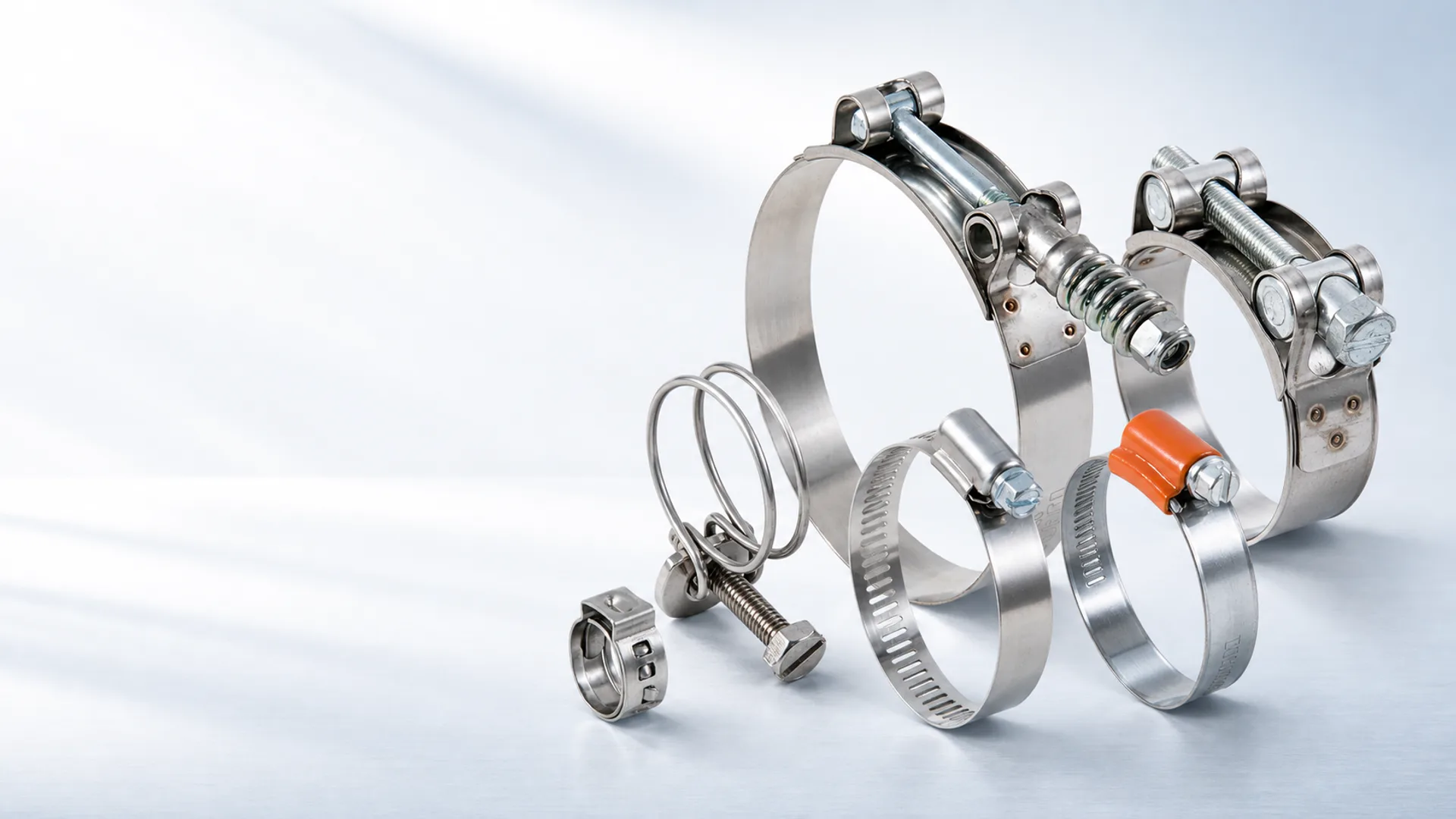
When people search for hose clamp types, they usually want a practical answer: which clamp should be used for a specific hose, pressure, vibration level, material, and installation environment. The main hose clamp types include German hose clamps, American hose clamps, British hose clamps, spring band clamps, T-bolt clamps, and heavy duty clamps.
For low-pressure general repair, American or British clamps may be enough. For automotive and industrial hoses that need more stable sealing, German clamps are often a better choice. For engine cooling systems with temperature cycling, spring band clamps are useful. For large-diameter, high-vibration, or heavy-load hose connections, T-bolt and heavy duty clamps are more suitable.
Hose Clamp Types Comparison Table
| Hose clamp type | Structure | Best fit | Pressure and vibration | Common use cases | Demeite reference |
|---|---|---|---|---|---|
| German hose clamp | Non-perforated or smoother band, stable screw housing, 9mm or 12mm band options | Medium-pressure hose sealing and long-service connections | Better vibration resistance than light perforated clamps | Automotive coolant hoses, machinery lines, industrial water hoses, pump connections | German Center Hose Clamp 9mm |
| American hose clamp | Perforated band with worm screw engagement | Wide adjustment range and cost-sensitive repair | Best for low to medium-low pressure; avoid severe vibration or over-tightening | Drainage hoses, ventilation ducts, irrigation, household repair, clamp assortment kits | Large American Type Hose Clamp |
| British hose clamp | Lightweight structure, often used in economical low-pressure fastening | Simple civil or temporary hose fixing | Low pressure; not ideal for humid or corrosive long-service environments unless material is upgraded | Household hoses, washing machine hoses, temporary water lines, light equipment | British Hanging Head Hose Clamp |
| Spring band clamp | Spring steel band that maintains tension as hose diameter changes | Automotive systems with thermal expansion and contraction | Good for temperature cycling; size selection must be accurate | Radiator hoses, coolant hoses, heater hoses, engine compartment connections | Spring Band Hose Clamp Standard Type |
| T-bolt hose clamp | Wide band with T-bolt, trunnion, nut, and stronger tightening structure | High holding force and larger hose diameters | Better for high vibration, boost, suction, and demanding industrial service | Turbo intake hoses, charge air lines, water suction hoses, heavy vehicles, machinery | T-Bolt Heavy Duty Hose Clamp |
| Heavy duty clamp | Single bolt, double bolt, double layer, or reinforced solid clamp structure | Large hose, rigid pipe connection, and repeated clamp failure locations | Suitable for stronger loads when standard hose clamps loosen, strip, or deform | Mining water hose, construction dewatering, industrial rubber hose, large pipe assemblies | Single Bolt Solid Heavy Duty Clamp |
German Hose Clamps
German hose clamps are often selected when the hose connection needs stable sealing, smoother contact, and better resistance to vibration. Compared with perforated American clamps, a German clamp usually has a more continuous band surface. This can reduce deep marks on soft rubber hoses when the clamp is installed correctly.
They are common in automotive cooling systems, machinery water lines, industrial equipment, and medium-pressure hose connections. A 9mm band works well for many compact hose positions, while a 12mm band provides a wider contact area for larger or more demanding connections.
American Hose Clamps
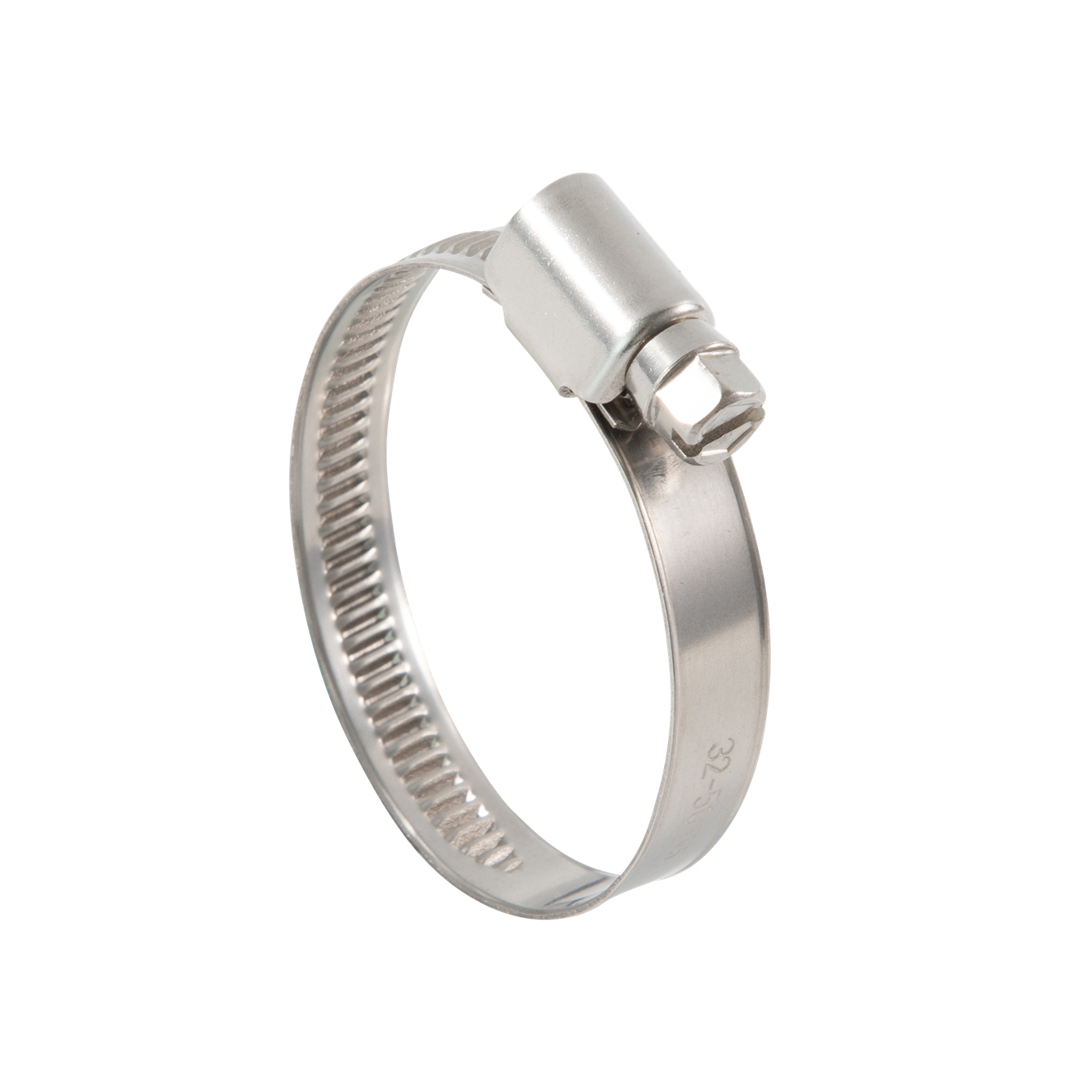
American hose clamps are recognized by their perforated band and wide adjustment range. This makes them convenient for hardware retail, repair kits, irrigation, drainage, ventilation, and general low-pressure maintenance.
Their main advantage is flexibility. One clamp size can often cover a broad diameter range, which helps with inventory and repair work. The limitation is that the perforated band is not the best choice for high pressure, strong vibration, or over-tightening. In those cases, German, T-bolt, or heavy duty clamps are usually safer.
British Hose Clamps
British hose clamps are lightweight and economical. They are suitable for low-pressure household and civil applications where cost and simple installation are more important than high clamping force.
For wet, outdoor, or corrosive environments, material selection matters. Zinc-plated versions may rust over time, so stainless steel should be considered when the clamp needs longer service life.
Spring Band Clamps
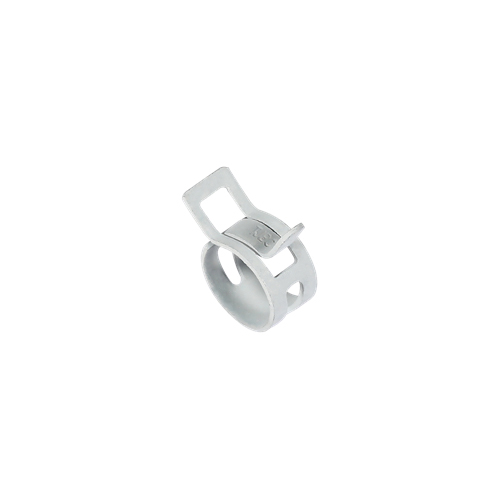
Spring band clamps are commonly used in automotive hose systems because they can maintain tension as the hose expands and contracts with temperature changes. This is useful for radiator hoses, coolant hoses, and heater hoses.
The key requirement is accurate sizing. A spring clamp that is too small may damage the hose or be difficult to install. A spring clamp that is too large may not create enough holding force.
T-Bolt Hose Clamps
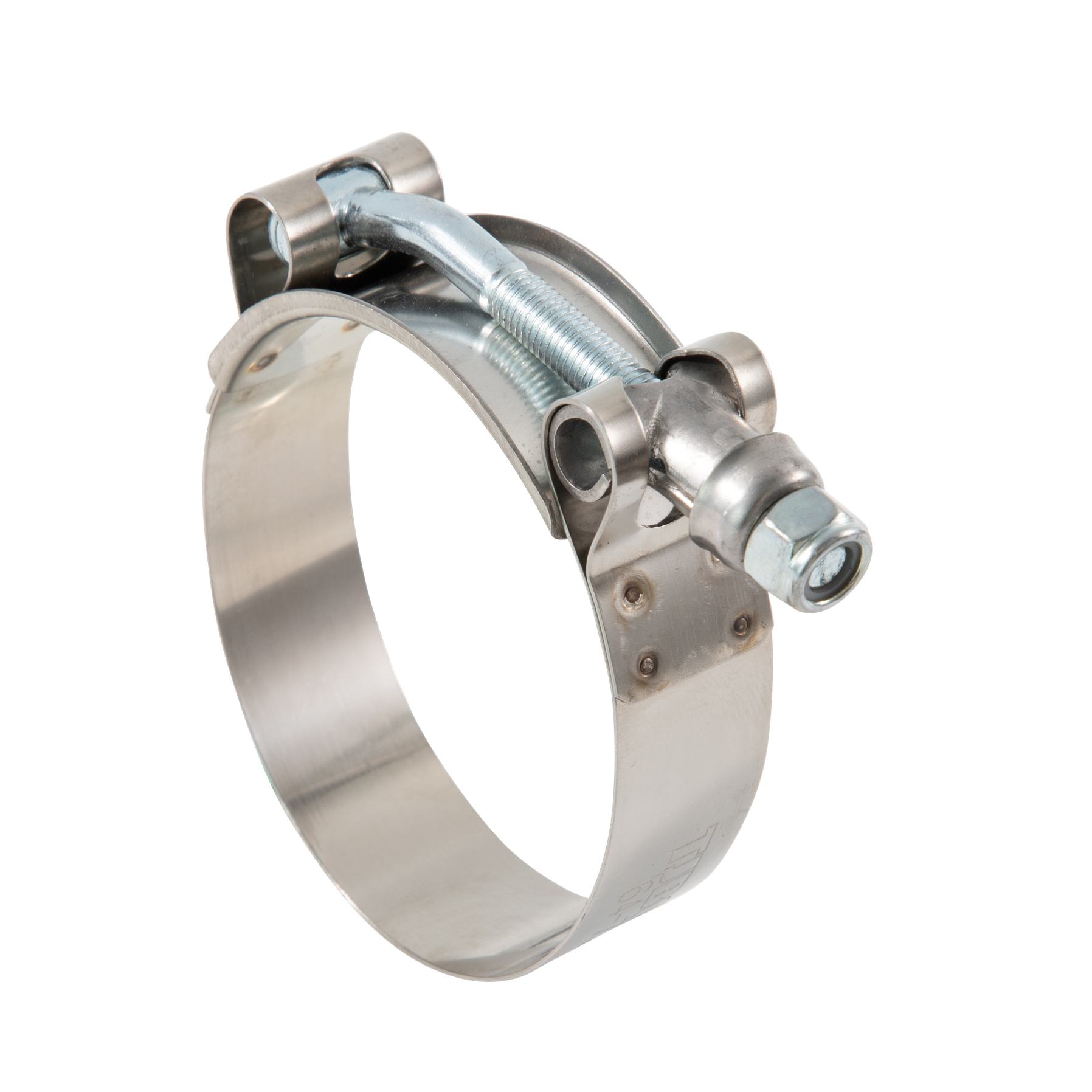
T-bolt hose clamps are designed for stronger fastening than ordinary worm gear clamps. Their T-bolt, nut, and trunnion structure provides higher clamping force and better stability on larger hose connections.
They are often used on turbo systems, heavy vehicles, charge air lines, water suction hoses, and machinery connections. If the hose is soft or thin, installers should control torque carefully because excessive force can damage the hose wall.
Heavy Duty Clamps
Heavy duty clamps include reinforced single bolt, double bolt, double layer, and solid structures. They are used when a standard hose clamp cannot provide enough holding force or repeatedly fails due to large diameter, vibration, load, or harsh working conditions.
Typical applications include construction dewatering, industrial rubber hoses, mining water transfer, machinery hoses, pump connections, and rigid pipe assemblies. They are stronger, but they also need enough installation space and proper torque control.
How to Choose the Right Hose Clamp Type
| Selection factor | What to check | Recommended direction |
|---|---|---|
| Pressure | Low, medium, high, suction, or boost pressure | Low pressure: American or British. Medium pressure: German. Higher load: T-bolt or heavy duty. |
| Vibration | Vehicle, machinery, pump, compressor, or stationary pipe | Use German, spring band, T-bolt, or heavy duty clamps for vibration-sensitive locations. |
| Temperature change | Engine bay, coolant system, heating, or outdoor thermal cycling | Spring band clamps are useful where hose diameter changes with temperature. |
| Hose material | Rubber, silicone, plastic, reinforced hose, or thin-wall hose | Use smoother band contact for soft hoses. Avoid over-tightening perforated clamps on soft rubber. |
| Environment | Indoor, outdoor, humid, marine, coastal, chemical, or salt spray | Use 304 stainless steel for outdoor and wet use; consider 316 stainless steel for coastal or corrosive environments. |
| Installation space | Open space, compact hose position, repeated maintenance, or large diameter | Use compact German or spring clamps for tight automotive spaces; use quick-release or heavy duty clamps where access and size require it. |
Quick Recommendation
Choose an American hose clamp for low-pressure general repair and broad adjustment. Choose a German hose clamp when sealing stability, smoother hose contact, and vibration resistance are important. Choose a British hose clamp for light-duty household use. Choose a spring band clamp for automotive temperature cycling. Choose a T-bolt clamp for stronger large hose connections. Choose a heavy duty clamp when ordinary clamps loosen, strip, deform, or fail in demanding service.
For sourcing, provide the hose outside diameter after installation, hose material, working pressure, temperature, vibration level, installation space, and environment. Demeite can help match the clamp type, material grade, size range, and packaging plan for maintenance, retail, OEM, or project procurement.
Q&A
What are the main hose clamp types?
The most common hose clamp types include German hose clamps, American hose clamps, British hose clamps, spring band clamps, T-bolt clamps, and heavy duty clamps. Each type is designed for different pressure, vibration, material, and installation conditions.
Which hose clamp type is best for automotive hoses?
For many automotive cooling and engine hoses, spring band clamps or German hose clamps are common choices. Spring clamps help with temperature cycling, while German clamps provide smoother contact and stable sealing for repair and maintenance.
Which hose clamp type is best for high pressure?
For higher pressure, large diameter, or strong vibration, T-bolt clamps and heavy duty clamps are usually better than ordinary perforated worm gear clamps. Final selection should still consider hose material, fitting design, and torque.
Are American hose clamps bad?
No. American hose clamps are useful for low-pressure repair, wide adjustment, and cost-sensitive applications. They are simply not the best first choice for high-pressure, high-vibration, or over-tightened connections.
What material should I choose?
For indoor dry use, zinc-plated steel may be acceptable when cost is important. For outdoor, humid, and long-service applications, 304 stainless steel is usually recommended. For coastal, salt spray, chemical, or highly corrosive environments, 316 stainless steel is a better choice.