Crimped Sleeves vs Band Clamps for Heavy-Duty Water Suction Hose
Should You Use Crimped Sleeves or Band Clamps for a Heavy-Duty Water Suction Hose?
Quick answer: use crimped sleeves when the hose assembly is permanent, safety-critical, factory-made, or expected to run for long hours with limited maintenance. Use band clamps when the water suction hose needs field repair, adjustable installation, easy removal, or practical service on construction, irrigation, dewatering, and pump systems.
For heavy-duty water suction hose, the best choice depends on the hose size, coupling style, vacuum load, discharge pressure, vibration, hose wall thickness, and whether the assembly must be serviced in the field. Band clamps can be a practical choice, but they must be sized correctly, tightened evenly, and matched to a suitable hose stem or fitting.
Quick Comparison
| Decision point | Crimped sleeves | Band clamps | Practical recommendation | Use case examples |
|---|---|---|---|---|
| Permanent hose assembly | Strong, uniform, tamper-resistant connection | Can loosen if incorrectly installed or not inspected | Choose crimped sleeves for factory-built, long-service assemblies | OEM pump skids, municipal bypass pumping, fixed industrial water transfer lines |
| Field repair or replacement | Requires crimping equipment and correct tooling | Can be installed or replaced with common tools | Choose band clamps when fast field service matters | Construction dewatering, agriculture irrigation repair, rental pump hose replacement |
| Large-diameter suction hose | Reliable when made with the correct sleeve, stem, and crimp spec | Heavy duty band clamps can work when properly matched to the coupling | Use engineered crimped assemblies for critical work; use heavy duty band clamps for serviceable installations | Mine water transfer, quarry washdown, drainage pump suction, temporary bypass lines |
| Frequent maintenance | Difficult to remove without cutting or replacing parts | Removable and adjustable | Choose band clamps where the hose is cleaned, inspected, or repositioned often | Screen washing, sludge water handling, portable pump systems, seasonal irrigation |
| Vibration or movement | More controlled when crimped to specification | Needs correct torque, clamp spacing, and periodic inspection | Choose crimped sleeves for high vibration or unattended operation; use heavy duty clamps with inspection for field systems | Diesel pump sets, construction machinery water lines, mobile dewatering trailers |
| Low-cost temporary setup | Higher tooling and setup requirement | Lower setup cost and easier inventory | Band clamps are usually more practical for temporary or adjustable hose assemblies | Emergency drainage, temporary water transfer, farm pump connections, site cleanup |
Why Water Suction Hose Connections Need Care
A water suction hose often works under vacuum on the pump inlet side. Even a small air leak at the coupling can reduce pump performance, cause priming problems, or interrupt suction. Heavy-duty suction hose may also be thick, reinforced, and large in diameter, so ordinary light clamps may not provide enough stable holding force.
The coupling area should seal against the hose stem, resist movement, and stay stable while the hose flexes. This is why the clamp or sleeve choice should be based on the whole assembly: hose type, coupling barb or stem design, wall thickness, working environment, and maintenance plan.
When Crimped Sleeves Are the Better Choice
Crimped sleeves are usually better for permanent assemblies where the hose, stem, sleeve, and crimp diameter are controlled as a system. A properly made crimped assembly gives uniform compression around the hose and is harder to disturb after installation.
Choose crimped sleeves when:
- The hose assembly is made by a hose shop or OEM supplier.
- The line is safety-critical, difficult to inspect, or used continuously.
- The connection sees high vibration, repeated movement, or long unattended service.
- The hose and coupling manufacturer provides a crimp specification.
- The project requires consistent assembly quality across many hoses.
Crimping is not a casual field operation. The sleeve, die, crimp diameter, hose construction, and coupling stem must match. If the crimp is wrong, the hose can leak, crack, or pull off under load.
When Band Clamps Are the Better Choice
Band clamps are usually better when the hose must be assembled, removed, repaired, or adjusted in the field. They are especially useful for heavy-duty water suction hose used in temporary pumping, construction drainage, agriculture, mine water transfer, and rental equipment.
Choose band clamps when:
- The hose size may change between jobs.
- The coupling needs to be removed for cleaning or replacement.
- The site does not have crimping equipment.
- The assembly is temporary or inspected regularly.
- The hose is used for water suction, drainage, irrigation, or general non-critical transfer.
For large-diameter or heavy-wall hose, choose a heavy duty band clamp instead of a light worm gear clamp. A stronger clamp gives better load distribution, more stable tightening, and better resistance to deformation.
Band Clamp Options for Heavy-Duty Water Suction Hose
For demanding water suction applications, Demeite's heavy duty clamp range can be used as a reference when selecting field-serviceable band clamps:
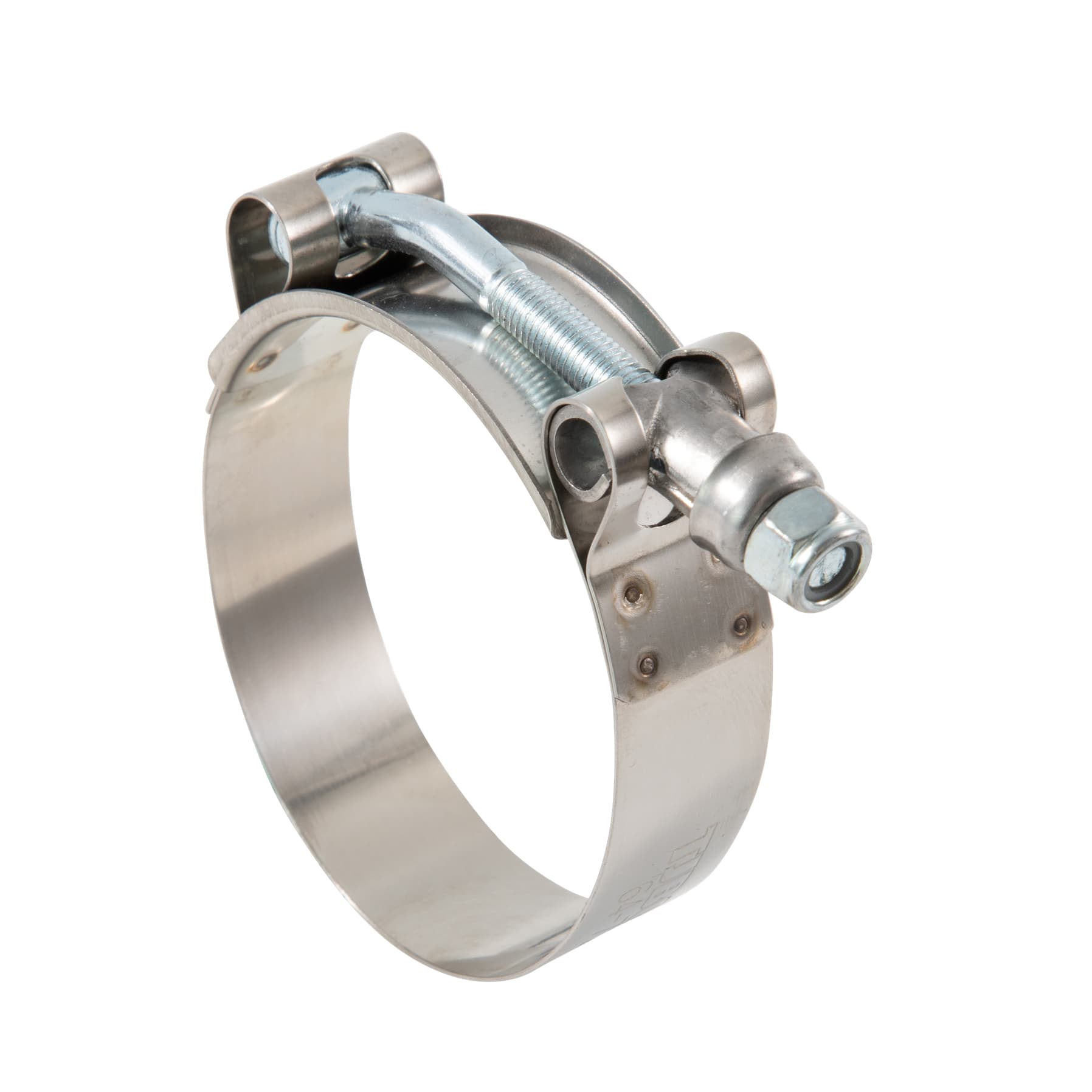
- T-Bolt Heavy Duty Hose Clamp: useful where higher tightening force and stronger band structure are needed.
- Single Bolt Solid Heavy Duty Clamp: suitable for heavy hose or pipe assemblies that need strong fastening.
- Heavy Duty Double Steel Wire Water Pipe Clamp: useful for water pipe, hose, nylon plastic hose, cloth hose, machinery, and chemical equipment connections.
The final selection should be based on hose outside diameter after installation, hose wall hardness, fitting design, available installation width, corrosion environment, and required inspection interval.
Installation Notes for Band Clamps
Measure the actual outside diameter after the hose is installed on the coupling. Do not choose the clamp only by nominal hose size. The clamp should sit over the supported sealing area of the hose stem, not at the loose edge of the hose.
For wide coupling areas or large suction hose, two clamps may be used when the fitting design and hose width allow it. Tighten gradually and evenly. After the first run, inspect the connection for air leaks, water leakage, hose movement, and clamp loosening.
Do not over-tighten. Too much force can cut into the hose cover, crush a soft hose wall, deform the coupling area, or damage the clamp. For critical installations, follow the hose and coupling manufacturer's assembly instructions.
Selection Rule
Use crimped sleeves for permanent, controlled, high-reliability hose assemblies. Use band clamps for adjustable, removable, field-serviceable heavy-duty water suction hose assemblies. If the job is high-risk, high-vibration, high-pressure, or unattended, ask the hose/coupling supplier for a validated assembly method instead of choosing only by clamp appearance.
Q&A
Q1: Should I use crimped sleeves or band clamps for a heavy-duty water suction hose?
Use crimped sleeves for permanent, factory-made, high-reliability assemblies. Use band clamps for field repair, temporary pumping, adjustable setups, or hose assemblies that need to be removed and serviced.
Q2: Are band clamps safe for suction hose?
They can be safe for suitable water suction applications when the clamp, hose, and coupling are correctly matched. The connection must be inspected for air leaks, movement, and loosening.
Q3: Can a standard worm gear clamp be used on a heavy-duty suction hose?
For small, low-demand hoses it may work, but heavy-duty water suction hose usually needs stronger band clamps, T-bolt clamps, or other engineered clamp systems.
Q4: Why do suction hose connections leak even when the clamp is tight?
Common causes include wrong clamp size, poor coupling fit, hose damage, uneven tightening, clamp placed in the wrong position, or an air leak on the suction side.
Q5: What information should I provide when asking for clamp selection?
Provide hose outside diameter after installation, hose material, coupling type, suction or discharge service, working pressure or vacuum condition, vibration, environment, corrosion risk, and whether the assembly is permanent or field-serviceable.
Reference Notes
- For permanent assemblies, follow the hose and coupling manufacturer's crimp specifications.
- For field-serviceable assemblies, inspect clamps periodically after installation and after the first operating cycle.
- For mining, municipal bypass, pump rental, or unattended industrial service, use a validated hose assembly method rather than relying on a general clamp recommendation.